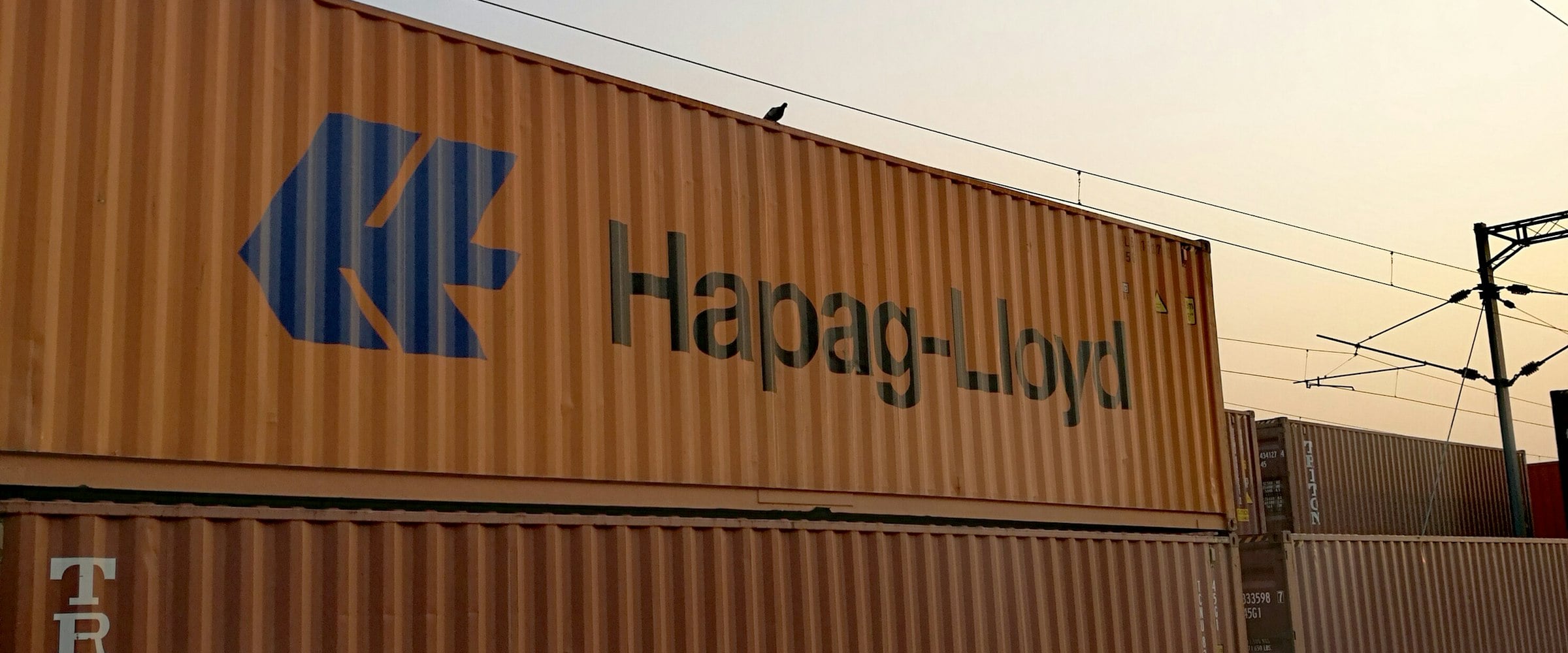
ISO container size and type codes
45G1: 40 ft high cube dry container
- Length (4)
- 40 ft (12,192 mm)
- Height and width (5)
- 9 ft 6 in (2,896 mm), high cube; 8 ft (2,438 mm) wide
- Type (G1)
- General purpose (GP): passive vents at the upper part of the cargo space
- TEU
- 2
Checking container numbers too? The container number check decodes the size/type code next to each number.
Codes in everyday use
Each has a page with its length, height, width, type group and TEU.
General purpose (dry)
- 22G120 ft dry container
- 22G020 ft dry container
- 20G120 ft dry container, 8 ft high
- 20G020 ft dry container, 8 ft high
- 25G120 ft high cube dry container
- 42G140 ft dry container
- 42G040 ft dry container
- 45G140 ft high cube dry container
- 45G040 ft high cube dry container
- L5G145 ft high cube dry container
- LEG145 ft high cube dry container, wide
Ventilated
Thermal
Open top and hard top
Flat racks
Tanks
- 22T020 ft tank, non-dangerous liquids, min. 0.45 bar
- 22T120 ft tank, non-dangerous liquids, min. 1.5 bar
- 22T220 ft tank, non-dangerous liquids, min. 2.65 bar
- 22T320 ft tank, dangerous liquids, min. 1.5 bar
- 22T420 ft tank, dangerous liquids, min. 2.65 bar
- 22T520 ft tank, dangerous liquids, min. 4 bar
- 22T620 ft tank, dangerous liquids, min. 6 bar
- 22T720 ft tank, gases, min. 9.1 bar
- 22T820 ft tank, gases, min. 22 bar
Dry bulk
How a size/type code is built
The first character is the length, the second the height and width, and the third and fourth the type. In 45G1, 4 is 40 ft long, 5 is 9 ft 6 in high (a high cube) and 8 ft wide, and G1 is a general purpose container with passive vents.
First character: length
| Code | Length | TEU |
|---|---|---|
| 1 | 10 ft (2,991 mm) | 0.5 |
| 2 | 20 ft (6,058 mm) | 1 |
| 3 | 30 ft (9,125 mm) | 1.5 |
| 4 | 40 ft (12,192 mm) | 2 |
| 5 | 45 ft (13,716 mm)5 is the current code for 45 ft. Under the 1995 edition it was L, so a 45 ft container may carry either. | 2.25 |
| L | 45 ft (13,716 mm)L is the 1995 edition’s code for 45 ft. The current code table uses 5, so a 45 ft container may carry either. | 2.25 |
| A | 7,150 mm | – |
| B | 24 ft (7,315 mm) | – |
| C | 24 ft 6 in (7,430 mm) | – |
| D | 7,450 mm | – |
| E | 7,820 mm | – |
| F | 8,100 mm | – |
| G | 41 ft (12,500 mm) | – |
| H | 43 ft (13,106 mm) | – |
| K | 13,600 mm | – |
| M | 48 ft (14,630 mm) | – |
| N | 49 ft (14,935 mm) | – |
| P | 53 ft (16,154 mm) | – |
TEU (twenty-foot equivalent unit) is worked out from the length: a 40 ft container is 2 TEU and a 45 ft one 2.25.
Second character: height and width
| Code | Height | Width |
|---|---|---|
| 0 | 8 ft (2,438 mm) | 8 ft (2,438 mm) |
| 2 | 8 ft 6 in (2,591 mm) | 8 ft (2,438 mm) |
| 4 | 9 ft (2,743 mm) | 8 ft (2,438 mm) |
| 5 | 9 ft 6 in (2,896 mm), high cube | 8 ft (2,438 mm) |
| 6 | over 9 ft 6 in (over 2,896 mm) | 8 ft (2,438 mm) |
| 8 | 4 ft 3 in (1,295 mm) | 8 ft (2,438 mm) |
| 9 | 4 ft or less (1,219 mm or less) | 8 ft (2,438 mm) |
| C | 8 ft 6 in (2,591 mm) | over 2,438 mm, up to 2,500 mm |
| D | 9 ft (2,743 mm) | over 2,438 mm, up to 2,500 mm |
| E | 9 ft 6 in (2,896 mm), high cube | over 2,438 mm, up to 2,500 mm |
| F | over 9 ft 6 in (over 2,896 mm) | over 2,438 mm, up to 2,500 mm |
| L | 8 ft 6 in (2,591 mm) | over 2,500 mm |
| M | 9 ft (2,743 mm) | over 2,500 mm |
| N | 9 ft 6 in (2,896 mm), high cube | over 2,500 mm |
| P | over 9 ft 6 in (over 2,896 mm) | over 2,500 mm |
ISO 6346 requires a height mark on any container taller than 8 ft 6 in (2,591 mm).
Third and fourth characters: type
The letter is the kind of container and the digit says more about it. Each type also belongs to a two-letter type group, such as GP for general purpose, so 45G1 is also written 45GP.
| Code | Meaning |
|---|---|
| G: General purpose | |
| G0 | General purpose (GP): openings at one or both ends |
| G1 | General purpose (GP): passive vents at the upper part of the cargo space |
| G2 | General purpose (GP): openings at one or both ends, plus full openings on one or both sides |
| G3 | General purpose (GP): openings at one or both ends, plus partial openings on one or both sides |
| G9 | General purpose (GP): with bulk capabilities (in the current code table) |
| V: Ventilated | |
| V0 | General purpose with ventilation (VH): non-mechanical ventilation, with vents at the lower and upper parts of the cargo space |
| V2 | General purpose with ventilation (VH): mechanical ventilation system inside the container |
| V4 | General purpose with ventilation (VH): mechanical ventilation system outside the container |
| B: Dry bulk | |
| B0 | Dry bulk, non-pressurised (BU): closed |
| B1 | Dry bulk, non-pressurised (BU): airtight |
| B3 |
|
| B4 |
|
| B5 |
|
| B6 |
|
| B7 | Dry bulk, non-pressurised (BU): open top, with full length and width bottom discharge (in the current code table) |
| B8 | Dry bulk, non-pressurised (BU): front discharge, full width (in the current code table) |
| B9 | Dry bulk, non-pressurised (BU): side discharge (in the current code table) |
| S: Named cargo and non-cargo carrying | |
| S0 | Named cargo (SN): livestock carrier |
| S1 | Named cargo (SN): automobile carrier |
| S2 | Named cargo (SN): live fish carrier |
| S4 | Non-cargo carrying (SC): generator (in the current code table) |
| S8 | Non-cargo carrying (SC): for sensitive installed equipment (in the current code table) |
| S9 | Non-cargo carrying (SC): for residential or commercial use (in the current code table) |
| R: Thermal: refrigerated and heated | |
| R0 | Refrigerated (RE): mechanically refrigerated |
| R1 | Refrigerated and heated (RT): mechanically refrigerated and heated |
| R2 | Refrigerated, self-powered (RS): self-powered, mechanically refrigerated |
| R3 | Refrigerated, self-powered (RS): self-powered, mechanically refrigerated and heated |
| R5 | Refrigerated, integrated machinery (RI): integrated, mechanically refrigerated and heated (in the current code table) |
| R7 | Heated (RH): heated (in the current code table) |
| R8 | Heated (RH): heated, self-powered (in the current code table) |
| H: Thermal: removable equipment, insulated, eutectic | |
| H0 | Refrigerated or heated, removable equipment (HR): refrigerated and/or heated, with removable equipment outside; heat transfer coefficient K = 0.4 W/(m²·K) |
| H1 | Refrigerated or heated, removable equipment (HR): refrigerated and/or heated, with removable equipment inside |
| H2 | Refrigerated or heated, removable equipment (HR): refrigerated and/or heated, with removable equipment outside; heat transfer coefficient K = 0.7 W/(m²·K) |
| H5 | Insulated (HI): insulated; heat transfer coefficient K = 0.4 W/(m²·K) |
| H6 | Insulated (HI): insulated; heat transfer coefficient K = 0.7 W/(m²·K) |
| H8 | Eutectic (HE): eutectic, remote mechanical refrigeration (in the current code table) |
| W: Foldable | |
| W0 | Foldable, folds on its base (WR): folds on its base structure (in the current code table) |
| W1 | Foldable, folds on its sides (WS): folds on its side structure (in the current code table) |
| U: Open top | |
| U0 | Open top (UT): openings at one or both ends |
| U1 | Open top (UT): openings at one or both ends, plus removable top members in the end frames |
| U2 | Open top (UT): openings at one or both ends, plus openings on one or both sides |
| U3 | Open top (UT): openings at one or both ends, plus openings on one or both sides, plus removable top members in the end frames |
| U4 | Open top (UT): openings at one or both ends, plus a partial opening on one side and a full opening on the other |
| U5 | Open top (UT): complete, fixed side and end walls (no doors) (in the 1995 edition) |
| U6 | Open top (UT): open top with a removable hard top (in the current code table) |
| U9 | Open top (UT): coil carrier (in the current code table) |
| P: Platform and flat rack | |
| P0 | Platform (PL): plain platform |
| P1 | Platform with fixed ends or posts (PF): two complete, fixed ends |
| P2 | Platform with fixed ends or posts (PF): fixed posts, free-standing or with a removable top member |
| P3 | Platform with folding ends or posts (PC): folding complete end structure |
| P4 | Platform with folding ends or posts (PC): folding posts, free-standing or with a removable top member |
| P5 | Platform with complete superstructure (PS): open top, open ends (skeletal) |
| P6 | Platform for named cargo (PT): ship’s gear carrier (in the current code table) |
| P7 | Platform for named cargo (PT): car carrier (in the current code table) |
| P8 | Platform for named cargo (PT): timber or pipe carrier (in the current code table) |
| P9 | Platform for named cargo (PT): coil carrier (in the current code table) |
| T: Tank (1995 edition) | |
| T0 | Tank, non-dangerous liquids (TN): non-dangerous liquids, minimum pressure 45 kPa (0.45 bar) (in the 1995 edition) |
| T1 | Tank, non-dangerous liquids (TN): non-dangerous liquids, minimum pressure 150 kPa (1.5 bar) (in the 1995 edition) |
| T2 | Tank, non-dangerous liquids (TN): non-dangerous liquids, minimum pressure 265 kPa (2.65 bar) (in the 1995 edition) |
| T3 | Tank, dangerous liquids (TD): dangerous liquids, minimum pressure 150 kPa (1.5 bar) (in the 1995 edition) |
| T4 | Tank, dangerous liquids (TD): dangerous liquids, minimum pressure 265 kPa (2.65 bar) (in the 1995 edition) |
| T5 | Tank, dangerous liquids (TD): dangerous liquids, minimum pressure 400 kPa (4 bar) (in the 1995 edition) |
| T6 | Tank, dangerous liquids (TD): dangerous liquids, minimum pressure 600 kPa (6 bar) (in the 1995 edition) |
| T7 | Tank, gases (TG): gases, minimum pressure 910 kPa (9.1 bar) (in the 1995 edition) |
| T8 | Tank, gases (TG): gases, minimum pressure 2200 kPa (22 bar) (in the 1995 edition) |
| T9 | Tank, gases (TG): gases, minimum pressure not yet assigned (in the 1995 edition) |
| K: Pressurised tank (current table) | |
| K0 | Tank, pressurised (liquids and gases) (KL): liquid tank, non-regulated goods (in the current code table) |
| K1 | Tank, pressurised (liquids and gases) (KL): liquid tank, dangerous goods, up to 2.65 bar (in the current code table) |
| K2 | Tank, pressurised (liquids and gases) (KL): liquid tank, dangerous goods, over 2.65 bar and up to 10 bar (in the current code table) |
| K3 | Tank, pressurised (liquids and gases) (KL): liquid tank, dangerous goods, over 10 bar (in the current code table) |
| K4 | Tank, pressurised (liquids and gases) (KL): liquid tank, non-regulated goods, needs a power supply (in the current code table) |
| K5 | Tank, pressurised (liquids and gases) (KL): liquid tank, dangerous goods up to 10 bar, needs a power supply (in the current code table) |
| K6 | Tank, pressurised (liquids and gases) (KL): liquid tank, dangerous goods over 10 bar, needs a power supply (in the current code table) |
| K7 | Tank, pressurised (liquids and gases) (KL): cryogenic tank (in the current code table) |
| K8 | Tank, pressurised (liquids and gases) (KL): gas tank (in the current code table) |
| N: Dry bulk tank (current table) | |
| N0 | Dry bulk tank, hopper (NH): hopper type, vertical discharge (in the current code table) |
| N1 | Dry bulk tank, hopper (NH): hopper type, rear discharge (in the current code table) |
| N3 | Dry bulk tank, non-pressurised (NN): non-pressurised, rear discharge (in the current code table) |
| N4 | Dry bulk tank, non-pressurised (NN): non-pressurised, side discharge (in the current code table) |
| N5 | Dry bulk tank, non-pressurised (NN): non-pressurised, tipping discharge (in the current code table) |
| N7 | Dry bulk tank, pressurised (NP): pressurised, rear discharge (in the current code table) |
| N8 | Dry bulk tank, pressurised (NP): pressurised, side discharge (in the current code table) |
| N9 | Dry bulk tank, pressurised (NP): pressurised, tipping discharge (in the current code table) |
| A: Air/surface | |
| A0 | Air/surface (AS): air/surface container (in the current code table) |
A container with reduced stacking or racking strength carries a letter in fourth place instead of the digit: A for 0, B for 1, D for 2, G for 3, J for 4, M for 5, V for 6, W for 7, X for 8, Y for 9. So 45GB is a 45G1 with reduced strength.
Where these tables come from
- The current tables are the ones the Bureau International des Containers (BIC), which keeps the ISO 6346 register, publishes for size and type.
- Containers built before the current edition still carry codes from the 1995 edition: tanks marked T0 to T9, pressurised bulk containers B3 to B6, and 45 ft containers marked L instead of 5. Those are decoded from the 1995 edition, and say so.
- Codes made only of digits (such as 2210) date from before 1995 and are not decoded here.
- If you mark containers, work from the current edition of ISO 6346 itself.
IsoTrack
Recording containers at your gate?
IsoTrack records each container’s number (with its check digit validated), owner, type, seal and condition at gate-in, keeps its yard slot and history, and works out storage charges from your free days and daily rate.